Keynotes
Towards Better Food Safety: Linking Predictive Microbiology, Risk Assessment, and System Complexity
Abstract
Predictive microbiology and Risk Assessment have become essential tools for anticipating pathogen behavior and associated risks in various foods. Despite the existence and usage of these tools, numerous outbreaks around the globe demonstrate persistent gaps in their application, assumptions and difficulty to fully capture food system complexity. This talk looks at a number of outbreak and contamination case studies, including Listeria in cantaloupe, EHEC in sprouts, Cronobacter in infant formula, highlighting how assumptions, unmodeled environments/risk factors and a failure to apply available tools can contribute to risk underestimation with potential public health consequences. In contrast, several success stories demonstrate the transformative potential of predictive risk assessment tools when effectively integrated into food‑safety decision‑making. These include national modelling programs supporting national policy development in efforts to prevent foodborne illnesses and product recalls. More recently, developments in AI and machine‑learning has enhanced modelling frameworks, and led to structured educational applications. Collectively, these cases show that predictive microbiology and risk assessment are powerful tools which can be useful when aligned with real‑world complexity. Education on the tools, strengthening model adoption, broadening environmental parameters, and integrating data‑driven approaches are critical for advancing proactive food‑safety systems.
Curriculum Vitae
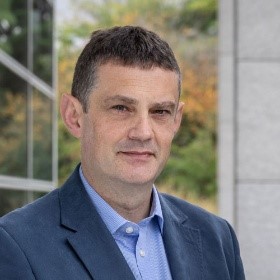
Prof. Enda Cummins is a faculty member in the UCD School of Biosystems and Food Engineering at University College Dublin. His work focuses on risk assessment, food safety, and systems-modelling approaches designed to strengthen public health and guide evidence‑based decisions in the agri‑food sector. His research brings together quantitative modelling, predictive microbiology, and integrated “farm‑to‑fork” systems analysis to better understand, predict, and mitigate risks across complex food and environmental pathways.
He has supervised 22 PhD students to completion in the areas of predictive modelling and risk assessment and has authored more than 170 publications in international peer‑reviewed journals (h‑index 55). Prof. Cummins has led and participated in numerous national and EU‑funded research initiatives, including coordinating the H2020 Marie Skłodowska‑Curie ITN PROTECT project (2019–2023), which advanced predictive modelling tools to evaluate the impacts of climate change on food safety.
He works closely with academic, industry, and regulatory partners, providing expert input to organisations such as the Food Safety Authority of Ireland (FSAI) and the European Food Safety Authority (EFSA). Alongside his research, he teaches and supervises at undergraduate, Master’s, and PhD levels, contributing significantly to capacity building and professional training in food safety and risk assessment
Scientific Machine Learning for Biological Systems
Abstract
Recently, scientific machine learning (SciML) – embedding mechanistic understanding with machine learning tools, has gained traction. While mechanistic models provide a structured framework to infer mechanisms driving biological phenomena, machine learning derives statistical relationships from the underlying data. Scientific machine learning methods leverage experimental data to infer unknown parameters, discover governing equations, or to correct incomplete biological models. In this keynote, we describe three SciML methods which can be used to: i) discover governing equations (SINDY), ii) correct incomplete biological models (UDE), iii) derive completely unknown dynamics (NDE).
Curriculum Vitae
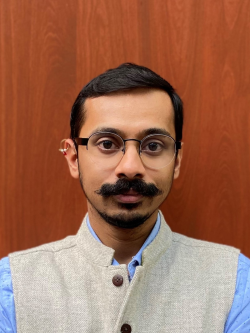
Satyajeet is a post doctoral researcher focusing at the BioTeC+ group at KU Leuven Technology Campus Ghent. His research is focused on incorporation of uncertainty in modelling bio(chemical) processes. During his post-doctoral career, he has worked on quantifying uncertainty and utilising it for optimisation of various processes.
Scientific research in BioTeC+ concentrates on model based optimization and control of microbial conversion processes. The underlying motivation is that model based solutions to process optimization and control problems are superior in performance and robustness as compared to plain heuristic approaches.
BioTeC+ Chemical & Biochemical Process Technology & Control
KU Leuven
Ghent, Belgium
Novel Greener Thermal Food Processing for Industrial Scale Design and Process Optimization
Abstract
The European Green Deal aims to create a cleaner, healthier and climate-neutral Europe by transforming the way we produce and consume. This approach is rather important in the view of food manufacturing considering that the conventional thermal processing holds a significant proportion in the industrial food processing. Using electrified processing technologies as novel approaches, however, have been a recent trend in the industrial process lines. Among these technologies, infrared, microwave, and radio frequency are gaining a more industrial preference. While the objectives are for efficient processing and reduced energy usage with improved quality, satisfying these challenges are mostly based on experimental trial and error interface of manufacture. Based on this, industrial adoption of these so-called eco-friendly processing techniques are rather challenging.
Knowing the required physics with the mathematical background for the given process provides unique features of the whole process for design purposes. Due to the required knowledge for industrial manufacturing in this view, the manufactured systems do not demonstrate the expected efficiency while the same systems are preferred to use for different purposes with minor changes in the process design conditions.
Therefore, the objective of this session was to present the computational design of infrared, microwave, radio frequency and ohmic heating systems using computational models and demonstrate the effect of the computational manufacturing approach. For this purpose, various industrial designs for thermal processing of food products will be presented.
Curriculum Vitae
You can download his short biography here in pdf format. 
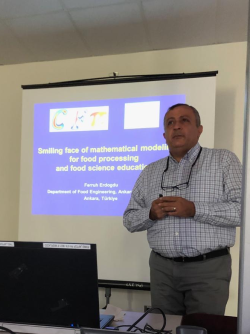
Department of Food Engineering
Ankara University
Ankara, Turkiye