Keynotes
Ez ikusi, ez ikasi (don't see, don't learn): The role of simulation in the AI era
Abstract
A paradigm shift: from deduction to induction
Simulation has become a key enabler of the current transition in scientific and engineering methodologies: a shift from traditional deductive approaches to inductive, data-driven
paradigms. In this new context, simulation acts as an extended “eye” that allows us to explore, anticipate, and accelerate developments in artificial intelligence.
Simulation is the tool that lets us:
See what we could not see: simulation for synthetic data generation: This section reviews both academic literature and industrial use cases where simulation is employed to generate
synthetic data, which is later used to train machine learning and other data-driven models. Such approaches are particularly valuable when real-world data is scarce, expensive, or
difficult to obtain.
See the effects of our actions: simulation for policy learning: We explore research and real-world applications in which simulation environments are used to learn optimal policies by testing different inputs and observing their consequences in a controlled virtual setting. This enables safer and more efficient experimentation, especially in complex or high-risk systems.
See faster: sim-to-real deployment accelerated through simulation: Finally, we present examples from both industry and research where simulation is leveraged to iterate and validate solutions faster than would be feasible in real environments. This sim-to-real approach significantly reduces development cycles and accelerates the deployment of AI-based systems.
Curriculum Vitae
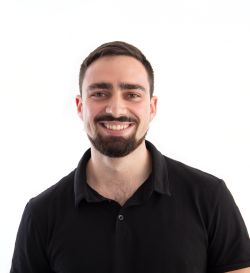
Kerman López de Calle Etxabe is a Researcher at Tekniker Technology Centre (BRTA), within the Intelligent Information Systems unit, where he develops applied research in condition monitoring, predictive maintenance, and artificial intelligence for industrial systems. He obtained his BSc in Renewable Energy Engineering from UPV/EHU in 2016, followed by an MSc in Computational Engineering and Intelligent Systems in 2017, carried out in collaboration with Tekniker. Between 2017 and 2020, he completed a PhD in Information Engineering (International PhD mention) at UPV/EHU, focused on context-aware, data-driven condition monitoring algorithms for industrial assets.
His main research lines include condition monitoring, health indicators, hybrid and data-driven modelling, digital twins, and AI-based monitoring for manufacturing and energy systems. He has authored numerous peer-reviewed journal and conference publications, contributing significantly to the fields of industrial AI and predictive maintenance, and has also been involved in doctoral supervision as director/co-director of the PhD thesis of Eider Garate Pérez, focused on advanced data-driven methods and machine learning applications for smart manufacturing. Additionally, he is a lecturer in the Digital Manufacturing Master’s program at IMH.
He has participated in multiple collaborative R&D projects, including European projects (MANTIS, AI‑PROFICIENT, INTER‑Q), oriented towards Industry 4.0 and Industry 5.0 applications. Regarding industry-driven projects, he has worked on production optimization algorithms for cutting systems and extruders with Continental, hybrid modelling approaches for electromechanical actuator monitoring with CESA, and gearbox monitoring systems with Siemens Gamesa and Goizper, among others.
The Autonomous Built Environment: Integrating the Simulation Continuum from Generative Design to Robotic Operations
Abstract
The AECO (Architecture, Engineering, Construction and Operations) sector is experiencing a significant paradigm shift, driven by the convergence of advanced simulation, semantic data models, and autonomous systems. This keynote lecture explores how the built environment is evolving through three transformative processes that are changing the way physical assets are managed, with simulation playing a key role in this industrial revolution.
1.From Graphic Representation to Generative Synthesis.
The transition from CAD-based drafting to generative design has led to the creation of intelligent models (both virtual and semantic). Leveraging robust ontologies and data-driven object
libraries has enabled the industry to evolve from basic Robotic Process Automation (RPA) to Generative AI. This allows complex design processes to be simulated with high fidelity and
end-user performance criteria to be validated automatically within a unified semantic framework.
2.From Physical Modelling to Edge-Based Operational Intelligence.
Reduced Order Models (ROMs) with high-fidelity, physics-based algorithms, such as Physics-Informed Neural Networks (PINNs), are transforming the landscape of Finite Element Method (FEM)
and Computational Fluid Dynamics (CFD) by significantly enhancing computational efficiency while maintaining high accuracy. These mathematical simplifications are particularly beneficial
for real-time applications, such as Building Energy Management Systems (BEMS) and Infrastructure SCADA networks moving simulation from the offline design phase to the heart of active,
self-optimising asset operation.
3.From Collaborative BIM to Autonomous Robotic Environments.
Building Information Modelling (BIM) has evolved from a static repository of federated data to become an all-encompassing, interoperable environment powered by Common Data Environments (CDEs).
BIM CDEs are essential for World Large Models (WLM) as they provide a centralised platform for data management, collaboration, and real-time updates, i.e. Digital Twins. Thanks to advanced
technologies such as the Internet of Things (IoT) and Artificial Intelligence (AI), autonomous robots can leverage the comprehensive data available in BIM CDEs to operate efficiently, adapt
to changing conditions, and contribute to the overall optimisation of the building environment.
Curriculum Vitae
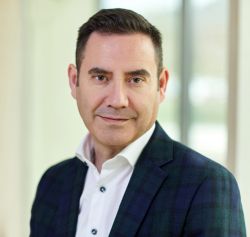
Dr. José Antonio Chica is Head of the “Next Construction Lab” at TECNALIA Research & Innovation, where he leads initiatives focused on the digital transformation and industrialisation of the Built Environment and AECO sector. He holds a PhD in Structural and Mechanical Engineering from the University of Burgos, as well as a Master´s and Bachelor’s degree in Mechanical Engineering from the University of the Basque Country (EHU). He also has an Executive MBA and an International Executive Programme from ESEUNE and the Georgetown University, as well as an Executive Certificate in Strategy and Innovation from the MIT Sloan School of Management.
He led the development of pioneering research infrastructures at TECNALIA, including the “KUBIK” facility for experimental validation of building energy efficiency and industrialised envelopes and the “Cement and Concrete 3D Printing Laboratory” for advanced prefabricated construction. These facilities support the integration of physical simulation with real-world data for assessing performance and innovating construction technologies.
In parallel. He also serves as an Academic Research Collaborator in the Department of Mining and Metallurgical Engineering and Materials Science at the University of the Basque Country (EHU), where he fosters synergies between fundamental academic research and applied industrial innovation.
Dr Chica actively contributes to European R&D policy and serves on the European Commission's “High Level Construction Forum” (HLCF), the “European Construction Technology Platform” (ECTP) and the “Spanish Construction Technology Platform” (PTEC). He has also advised the European Commission’s Technical Group for the “Research Fund for Coal and Steel” (RFCS).
Head of the “Next Construction Lab
TECNALIA Research & Innovation
Derio, Spain
Invited Speaker
From Deep Learning to Neuro-Symbolic AI: Building Explainable Frameworks for Cultural Heritage Sciences
Abstract
This talk provides a critical reflection on the integration of Artificial Intelligence (AI) in the scientific restoration of Notre-Dame de Paris, through the lens of the ERC n-dame_heritage project. Cultural heritage corpora are inherently complex, heterogeneous, and fragmented, posing unique challenges for interpretability—a limitation where classical deep learning often falls short. We present multimodal AI architectures designed to address these challenges, including:
Foundation Models for semantic segmentation of architectural elements and degradation patterns, enabling fine-grained analysis of historical structures.
Neuro-symbolic workflows that combine the generative capabilities of Large Language Models (LLMs) with the formal rigor of knowledge-based systems and SKOS thesauri, ensuring both flexibility and interpretability.
Multimodal knowledge graphs that integrate heterogeneous historical data through topological and semantic relations, facilitating cross-disciplinary insights.
By transitioning from "black-box" models to Explainable Neuro-Symbolic AI (XAI), we demonstrate how AI can become a transparent collaborator for heritage experts. The talk concludes with perspectives on Human-in-the-Loop frameworks, where AI augments rather than replaces human expertise in the Humanities, fostering a co-construction of knowledge between computer scientists and domain specialists.
Curriculum Vitae
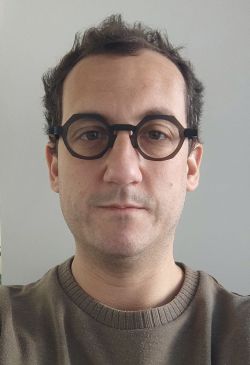
Kévin Réby is a Postdoctoral Researcher at CNRS (UPR 2022 MAP, Marseille, France), where he contributes to the development of multimodal AI and neuro-symbolic systems as part of an interdisciplinary team dedicated to cultural heritage. His work bridges computer vision, natural language processing, and computational humanities, with a focus on explainable AI (XAI) for complex historical data.
He holds a PhD in Computer Science (Univ. Bordeaux, LaBRI) on deep learning for behavioral analysis and is currently a researcher within the ERC n-dame_heritage project, as part of the Digital Data group of the Scientific Action of Notre-Dame de Paris. His work focuses on applying 3D reconstruction (NeRF, Gaussian Splatting), Object Detection and Semantic Segmentation on 2d images, Large Language Models (LLMs), and knowledge graphs to support the scientific study of the cathedral. The team leverages high-performance computing resources (Jean Zay supercomputer, GENCI/IDRIS) to train large-scale models and collaborates closely with heritage experts to develop interpretable and actionable AI frameworks.
Kévin is actively involved in interdisciplinary research, serving on the scientific committees of the The Spatial Intelligence for Cultural Heritage (SINT4CH) workshop (CVPR 2026), Digital Heritage 2025. Committed to education and outreach, he teaches courses on Generative AI and LLMs for Architecture.
CNRS, UPR 2022 MAP
Campus CNRS Joseph Aiguier
Marseille, France


