|
|
|
|



Conference Location
|
|
|
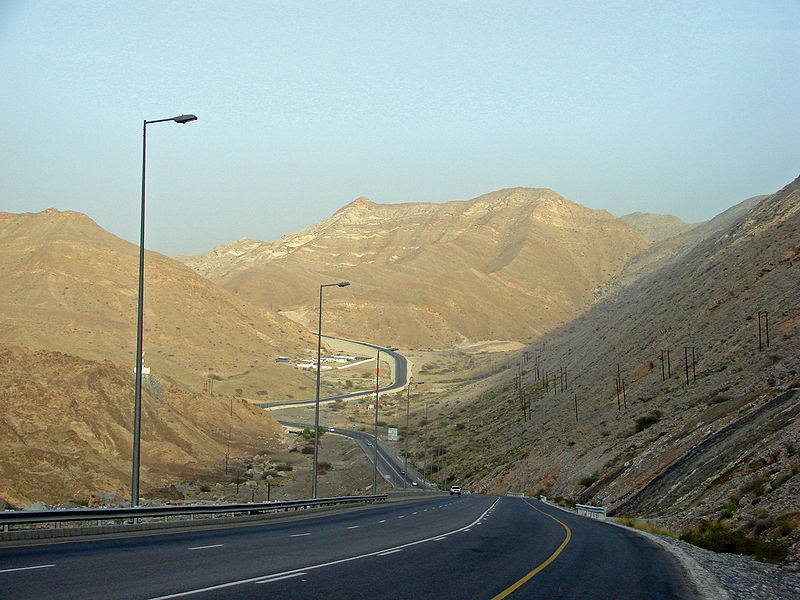
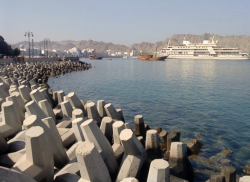
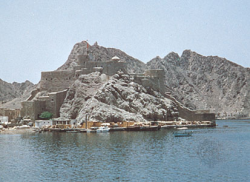
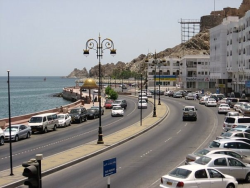
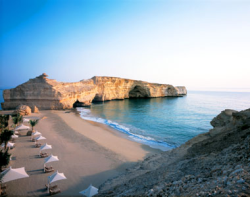
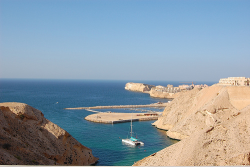
The rocky Western Al Hajar Mountains dominate the landscape of Muscat. The city lies on the Arabian Sea along the Gulf of Oman and is in the proximity of the strategic Straits of Hormuz. Low-lying white buildings typify most of Muscat's urban landscape, while the port-district of Muttrah, with its corniche and harbour, form the north-eastern periphery of the city. Muscat's economy is dominated by trade, petroleum and porting |
HistoryEvidence of communal activity in the area around Muscat dates back to the 6th millennium BCE in Ras al-Hamra, where burial sites of fishermen have been found. The graves appear to be well formed and indicate the existence of burial rituals. South of Muscat, remnants of Harappan pottery indicate some level of contact with the Indus Valley Civilisation. Muscat's notability as a port was acknowledged as early as the 1st century CE by Greek geographers Ptolemy, who referred to it as Cryptus Portus (the Hidden Port), and by Pliny the Elder, who called it Amithoscuta. |
|
|
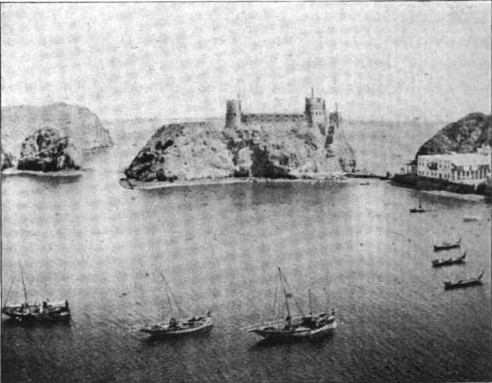
The port fell to a Sassanid invasion in the 3rd century CE, under the rule of Shapur I., while conversion to Islam occurred during the 7th century. Muscat's importance as a trading port continued to grow in the centuries that followed, under the influence of the Azd dynasty, a local tribe. The establishment of the First Imamate in the 9th century CE was the first step in consolidating disparate Omani tribal factions under the banner of an Ibadi state. However, tribal skirmishes continued, allowing the Abbasids of Baghdad to conquer Oman. The Abbasids occupied the region until the 11th century, when they were driven out by the local Yahmad tribe. Power over Oman shifted from the Yahmad tribe to the Azdi Nabahinah clan, during whose rule, the people of coastal ports such as Muscat prospered from maritime trade and close alliances with the Indian subcontinent, at the cost of the alienation of the people of the interior of Oman. The Portuguese conqueror Alfonso de Albuquerque attacked Muscat in July, 1507. A bloody battle ensued between the Portuguese and forces loyal to the Persian governor of the city. After the fall of the town, Albuquerque massacred most of the remaining inhabitants – men, women and children, following which the town was occupied and pillaged. |
|
The Portuguese maintained a hold on Muscat for over a century, despite challenges from Persia and a bombardment of the town by the Turks in 1546. The Turks twice captured Muscat from the Portuguese, in the Capture of Muscat (1552) and 1581-88. The election of Nasir bin Murshid al-Yaribi as Imam of Oman in 1624 changed the balance of power again in the region, from the Persians and the Portuguese to local Omanis. On August 16, 1648 the Imam dispatched an army to Muscat, which captured and demolished the high towers of the Portuguese, weakening their grip over the town. Decisively, in 1650, a small but determined body of the Imam's troops attacked the port at night, forcing an eventual Portuguese surrender on January 23, 1650. A civilian war, and repeated incursions by the Persian king Nadir Shah in the 18th century destabilised the region, and further strained relations between the interior and Muscat. This power vacuum in Oman led to the emergence of the Al Bu Sa‘id dynasty, which has ruled Oman ever since. |
|
|
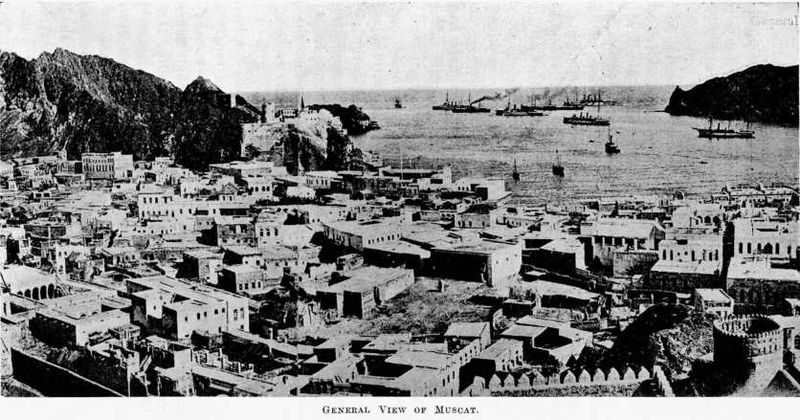
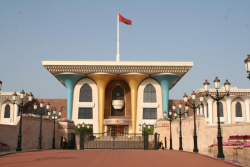
Muscat's naval and military supremacy was re-established in the 19th century by Said bin Sultan, who gained control over Zanzibar, eventually moving his capital to Stone Town, the ancient quarter of Zanzibar City, in 1840. However, after his death in 1856, control over Zanzibar was lost when it became an independent sultanate under his sixth son, Majid bin Said (1834/5–1870), while the third son, Thuwaini bin Said, became the Sultan of Oman. During the second half of the 19th century, the fortunes of the Al Bu Sa`id declined and friction with the Imams of the interior resurfaced. Muscat and Muttrah were attacked by tribes from the interior in 1895 and again in 1915. A tentative ceasefire was brokered by the British, which gave the interior more autonomy. However, conflicts among the disparate tribes of the interior, and with the Sultan of Muscat and Oman continued into the 1950s, and eventually escalated into the Dhofar Rebellion (1962). The rebellion forced the Sultan Said bin Taimur to seek the assistance of the British in quelling the uprisings from the interior. The April 26, 1966 failed assassination attempt on Said bin Taimur led to the further isolation of the Sultan, who had moved his residence from Muscat to Salalah, amidst the civilian armed conflict. On July 23, 1970, Qaboos bin Said, son of the Sultan, staged a bloodless coup d'état in the Salalah palace with the assistance of the British, and took over as ruler. |
|
With the assistance of the British, Qaboos bin Said put an end to the Dhofar uprising and consolidated disparate tribal territories. He renamed the country the Sultanate of Oman (called Muscat and Oman hitherto), in an attempt to end to the interior's isolation from Muscat. Qaboos enlisted the services of capable Omanis to fill positions in his new government, drawing from such corporations as Petroleum Development Oman (PDO). New ministries for social services such as health and education were established. The construction of Mina Qaboos, a new port conceived initially by Sa`id bin Taimur, was developed during the early days of Qaboos' rule. Similarly, a new international airport was developed in Muscat's Seeb district. A complex of offices, warehouses, shops and homes transformed the old village of Ruwi in Muttrah into a commercial district. The first five-year development plan in 1976 emphasised infrastructural development of Muscat, which provided new opportunities for trade and tourism in the 1980s – 1990s, attracting migrants from around the region. |
|
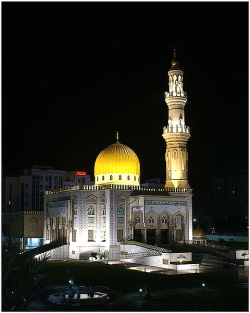
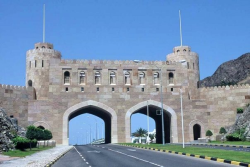
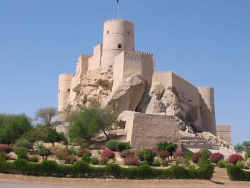
 Muscat (Arabic: مسقط, Masqaṭ) is the capital of Oman. It is also the seat of government and largest city in the Governorate of Muscat. Known since the early 1st century CE as an important trading port between the west and the east, Muscat was ruled by various indigenous tribes as well as foreign powers such as the Persians and the Portuguese Empire at various points in its history. A regional military power in the 18th century, Muscat's influence extended as far as East Africa and Zanzibar. As an important port-town in the Gulf of Oman, Muscat attracted foreign tradesmen and settlers such as the Persians, the Balochs and Gujaratis. Since the ascension of Qaboos bin Said as Sultan of Oman in 1970, Muscat has experienced rapid infrastructural development that has led to the growth of a vibrant economy and a multi-ethnic society.
Parts of this text were copied from 
Conference Venue
|
|
The conference will be held at |
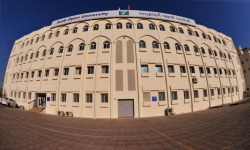
 Tel: +968 24699444
 Email: to be added
Travelling to Muscat
By Plane |
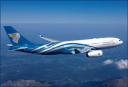
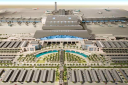
The main airport is Muscat International Airport around 25 km (16 mi) from the city's business district of Ruwi and 15 to 20 km from the main residential localities of Al-Khuwair, Madinat Al Sultan Qaboos, Shati Al-Qurm and Al-Qurm. Muscat is the headquarters for the local Oman Air, which flies to several destinations within the Middle East, the Indian Subcontinent, East Africa and Europe. Other airlines such as Turkish Airlines, Sri Lankan, Royal Jordanian, British Airways, PIA, Jet Airways, Lufthansa, Emirates, Swiss International Air Lines, Kuwait Airways, Air India and Thai Airways also fly through Muscat International Airport. |
By Bus and Taxi |
Several forms of public transport are popular in Oman. Most popular are the "Baiza" buses, so named for the lower denomination of the Omani Rial, the baiza (an adaptation of the Indian lower denomination paisa). These are relatively inexpensive and service all major roadways, as well as a wide and loose network of smaller byways in the greater Muscat metropolitan area, opportunistically dropping off and picking up passengers at any location. Less popular and slightly more expensive are large public buses, coloured red and green, whose service is limited to major roadways and point-to-point travel routes between Oman's major cities and towns. Taxis, also colour-coded orange and white, provide semi-personal transportation in the form of both individual hire and the same opportunistic roadway service as Baiza buses. Baiza buses and colour-coded orange-and-white taxis are unmetered, after several government initiatives to introduce meters were rejected. The fare is set by way of negotiation, although taxi drivers usually adhere to certain unwritten rules for fares within the city. In many countries, one is advised to negotiate a fare with the driver before getting into a taxi. However, in Oman, asking for the fare beforehand often demonstrates a passenger's newness and unfamiliarity with the area. One should always find out the normally accepted fare for one's journey from one's hotel or host before looking for a taxi. Taxis will also generally take passengers to locations out of the city, including Sohar, Buraimi and Dubai. |
By Car |
Cars can be rented at the airport. The Muscat area is well serviced by paved roads and dual-carriageway connects most major cities and towns in the country so driving around is not a problem. |

.png)

Useful Map
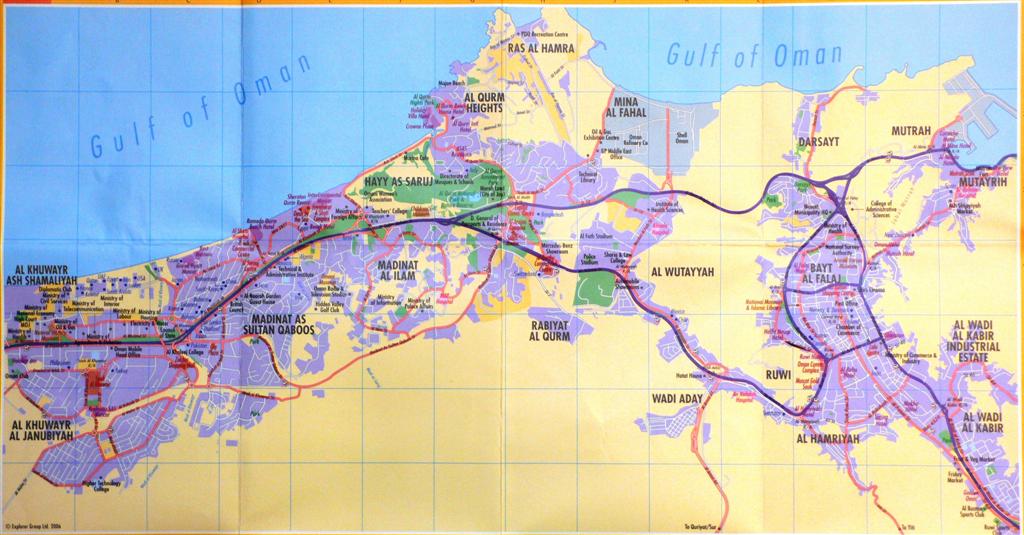
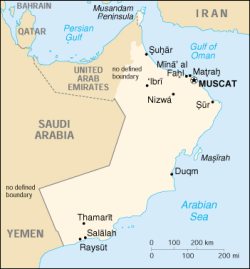
Click on the above map for a detailed view of Muscat
Visitor's Survival Guide
|
Entry Requirements: A passport and visa are required. European and GCC Visitors may obtain a visa for Oman at the airport. The AOU in Muscat can help in processing the visa for other applicants provided they receive full visa fees in advance. Please allow also for 1 month prior to the conference for the visa to be processed. More information on obtaining a VISA can be found here on the official Royal Oman Police website |
Customs Requirements: Internationally prohibited items, such as drugs, firearms, poisons, chemicals, explosives and pornographic materials, among others, may not be imported into Oman.
Travel within Oman: Baiza buses and colour-coded orange-and-white taxis are unmetered. The fare is set by way of negotiation, although taxi drivers usually adhere to certain unwritten rules for fares within the city. In many countries, one is advised to negotiate a fare with the driver before getting into a taxi. However, in Oman, asking for the fare beforehand often demonstrates a passenger's newness and unfamiliarity with the area. One should always find out the normally accepted fare for one's journey from one's hotel or host before looking for a taxi.